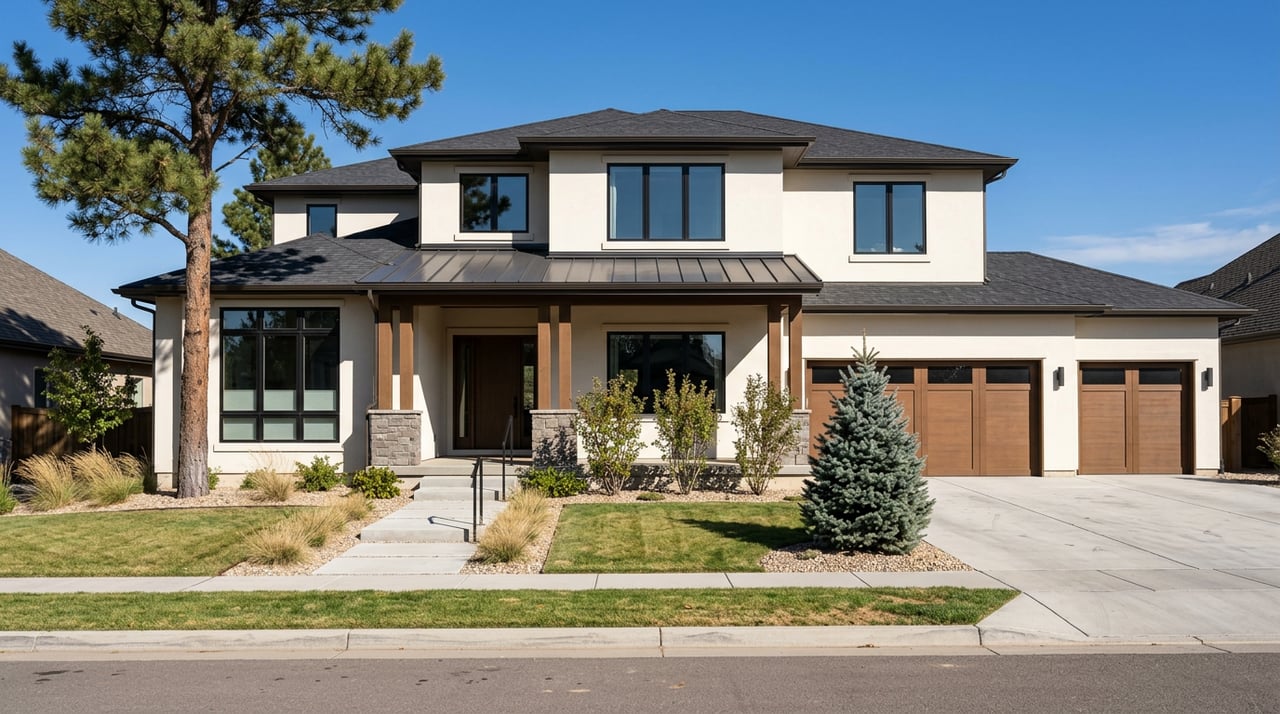
Staring down a choice between Parker and Castle Rock for your next home can feel like splitting hairs. Both offer similar prices, good access to the Denver–south metro corridor, and a wide mix of neighborhoods. If you’re moving up for more space, a better floor plan, or a newer build, small differences matter. In this guide, you’ll see how price bands, lot sizes, commutes, and new construction stack up so you can make a confident, data-backed decision. Let’s dive in.
Price bands that fit move-up goals
Consumer snapshots in early 2026 place both Parker and Castle Rock single-family medians in the mid $600,000s. That sets a practical frame for most move-up searches. Use these three bands as a starting point, then tighten with current MLS data before you write an offer.
- Lower move-up: about $600,000 to $750,000. You’ll typically find larger 3–4 bedroom homes than a starter, often on 0.10–0.25 acre lots with recent interior updates.
- Core move-up: about $750,000 to $1,000,000. Expect newer builds, more square footage, higher-end finishes, and yards closer to 0.20–0.50 acre.
- Premium move-up: above $1,000,000. This is where custom or semi-custom homes and larger parcels live. Lots can range from a half acre to several acres with added utility or maintenance considerations.
These bands shift with the market cycle. Before you act, pair a 12-month sold-price trend with a lot-size filter in the MLS to confirm where today’s inventory actually sits.
Space and lots: where you get more land
Both towns offer the full spectrum from compact master-planned lots to acreage. Knowing where larger parcels cluster can save you weeks of searching.
Parker lot patterns
- Master-planned neighborhoods such as Stroh Ranch, Stonegate, and Stepping Stone commonly run about 0.10–0.25 acre. This works well if you prioritize interior space and amenities over yard depth.
- The Pinery and nearby rural-edge pockets in Parker often deliver 0.25–1.0+ acre lots and a mix of custom and semi-custom homes. If you want a fuller yard without leaving Parker conveniences, start here.
- Practical tip: If acreage or a deep backyard is a must-have, focus on The Pinery and outlying filings rather than tighter master-plan tracts.
Castle Rock lot patterns
- The Meadows, Founders Village, and similar subdivisions usually feature suburban lots in the roughly 0.12–0.20 acre band.
- On the town’s edges and in newer planned districts, you’ll find wider lot mixes. As phases build out, some filings will include narrow-lot products alongside larger sites.
- The Dawson Trails and Crystal Valley area are set to add many new single-family lots with a span of 35–60 foot lot widths and some larger options as phases progress. Town records outline the specific mix and phasing.
For any address, confirm lot acreage and legal description in the Douglas County Assessor Real Property Map Viewer. It is the authoritative record for parcel sizes and tax history. You can access it through the county’s Assessor portal.
Commute and connectivity differences
On average, Parker residents report a shorter one-way commute than Castle Rock residents. American Community Survey data shows Parker around 26.1 minutes and Castle Rock roughly 28–29 minutes. These are townwide averages and not a promise for any front door, but they set expectations. See the ACS QuickFacts for Parker for context.
Parker routing notes
- SH-83 (Parker Road) is the town’s main north–south spine. E-470 offers a tolled loop to I-25, the Denver Tech Center, and DIA.
- The Town’s Transportation Master Plan and Parker Road corridor studies focus on growth and multimodal improvements. If you rely on SH-83, these projects can influence your future drive times and resale narrative. Review the Transportation Master Plan for planned improvements.
Castle Rock routing notes
- Castle Rock fronts I-25, which provides straightforward access north to DTC and Denver, and south to Colorado Springs. Congestion at peak hours is the main variable.
- The Crystal Valley interchange and related projects are major near-term changes that will alter connectivity for southeast Castle Rock. Town planning records detail the schedule and scope. See the Town’s Crystal Valley interchange and Dawson Trails documents.
Transit context
Neither town has continuous light rail. Castle Rock has evaluated regional and express options like potential Bustang stops, and both towns offer limited local services for non-driving residents. For a high-level overview, check Castle Rock’s transit and transportation FAQ.
Bottom line: test your exact commute at peak hours in both directions. A 10-minute Saturday drive can become 25 minutes on Tuesday morning.
New construction vs established neighborhoods
If “newer floor plan, better energy efficiency, builder warranty” are high on your list, you’ll see different patterns by town.
Castle Rock new-build focus
- The largest near-term pipeline sits in the Dawson Trails and Crystal Valley area. Expect a broad mix of lot widths, town planning coordination with the Crystal Valley interchange, and more consistent new-home availability as filings deliver. Planning records describe the product mix and phasing. You can review the Town’s planned development documentation.
Parker new-build focus
- Parker continues to add homes through final phases in existing master plans and select infill neighborhoods. If you prefer Parker’s services and Mainstreet amenities, you can still find new or recent product while staying within town limits.
In both towns, verify HOA and metro district fees, property tax rates, and any required transfer fees before you lock in a builder contract. Newer homes can carry higher monthly fixed costs due to special district bonds.
Amenities snapshot for lifestyle alignment
- Parker: Town-managed recreation, the PACE Center, and a robust event calendar support an active community life. Explore the Parker Recreation system to understand programming and facility access.
- Castle Rock: Destination parks and trail networks are a major draw. Philip S. Miller Park, plus regional trail connectivity, shape weekend routines. The Town’s parks and trails map helps you visualize proximity.
Keep amenity proximity in your must-have list, but avoid overpaying for a feature you’ll rarely use.
Five budget checks before you choose
A home that looks equal on price can be very different on total monthly cost. Use this quick checklist.
- HOA and metro district fees. Master-planned communities can add significant monthly or annual assessments. Request full fee schedules and bond disclosures.
- Property taxes. Pull the most recent assessed value and tax bill on the county site for any address you like. The Assessor portal is your source of truth.
- Utilities and services on larger lots. Acreage may involve well and septic with separate maintenance planning. Ask for recent utility history when available.
- Commute cost and time. Run live drive tests for AM and PM peaks to DTC, downtown Denver, DIA, or Colorado Springs as relevant.
- Resale drivers. Proximity to future interchanges or corridor improvements can change buyer demand. Track Town plans in Parker and Castle Rock for a forward-looking view.
Quick scenarios to speed your decision
- You want the most land while staying near Parker amenities. Target The Pinery and nearby rural-edge filings in Parker.
- You want a newer home with builder incentives and flexible timelines. Start with Castle Rock’s Dawson Trails and Crystal Valley area, then compare Parker’s active infill phases.
- You split commutes between DIA and DTC. Parker’s E-470 access can reduce variability. Validate with peak-hour route tests.
- You commute primarily via I-25. Castle Rock’s frontage simplifies routing. Watch the Crystal Valley interchange progress for improving southeast access.
- You value town-managed recreation first. Parker’s PACE Center and recreation system may tip the scale.
- You prioritize destination trails and outdoor features. Castle Rock’s park network is a strong fit.
How to make the call with confidence
Here is a simple process I use with clients to convert preferences into a precise plan.
Define the price band with current MLS data. We’ll run a 12-month rolling analysis for Parker and Castle Rock single-family homes, then segment by lot size to reveal the real premium for yards and acreage.
Map the lot-size distribution. We’ll use the Douglas County parcel dataset to see where parcels under 0.25 acre dominate and where 0.5-acre-plus lots cluster.
Run commute trials. We’ll test your exact addresses to your real destinations during peak hours, in both directions.
Compare new-build options against total monthly cost. We’ll stack builder incentives, HOA and metro district fees, and property tax estimates next to resale options.
Set a negotiation strategy. We’ll time offer windows, structure terms to lower risk, and target value that aligns with your must-haves.
Ready for a side-by-side, data-backed plan for Parker and Castle Rock? Reach out to Precision Spaces and let’s build your move-up strategy. Contact Rob for a precision market plan.
FAQs
What does “move-up” mean in Parker and Castle Rock?
- It typically means buying a home with more interior square footage, a larger lot, or a newer floor plan than your current home, usually starting around the mid $600,000s and up depending on inventory.
How do Parker and Castle Rock commutes compare on average?
- ACS data shows Parker’s mean one-way commute around 26.1 minutes and Castle Rock about 28–29 minutes, but your exact address and destination will drive real results.
Where can I find larger lots in Parker or Castle Rock?
- In Parker, The Pinery and rural-edge pockets commonly offer 0.25–1.0+ acre lots; in Castle Rock, larger parcels appear on the town’s fringes, with suburban lots common in The Meadows and Founders Village.
What projects could change Castle Rock traffic patterns?
- The Crystal Valley interchange and related access improvements are key near-term changes that will affect southeast Castle Rock connectivity as new phases in Dawson Trails and nearby areas build out.
Is new construction easier to find in Castle Rock than Parker?
- Castle Rock has a larger near-term pipeline in Dawson Trails and Crystal Valley, while Parker continues to add new homes through infill and final phases inside existing master plans.
What hidden costs should I review before choosing a neighborhood?
- Confirm HOA and metro district fees, property taxes, and any utility or maintenance needs on larger lots, then run commute tests to understand time and toll costs.