If you are moving up in Colorado Springs, Cordera is probably on your shortlist for one simple reason: it gives you more than just a bigger house. You are likely comparing square footage, lot quality, monthly costs, and how a neighborhood will actually function for your day-to-day life. This guide breaks down Cordera’s plans, HOA structure, and real ownership costs so you can compare it with clear numbers instead of guesswork. Let’s dive in.
Why Cordera Appeals to Move-Up Buyers
Cordera is a master-planned neighborhood in northeast Colorado Springs near Briargate, inside the City of Colorado Springs. Official community materials note amenities such as a renovated community center, a Grand Lawn of more than five acres, themed parks, and internal trail and underpass connections.
For move-up buyers, that matters because the decision is rarely just about buying more bedrooms. You are often looking for a neighborhood that feels established, offers usable community features, and supports a longer-term housing plan.
Cordera also tends to sit above the entry-level part of the market. As of April 2026, Realtor.com showed a median listing price of $784,500, a median price of $236 per square foot, 50 homes for sale, and a median 38 days on market.
That pricing profile tells you something important. In Cordera, you are usually comparing larger and newer homes, often with more finished space and more upgraded lots, rather than trying to sort through starter-home inventory.
What Home Plans Look Like in Cordera
Expect Larger Ranch and Two-Story Homes
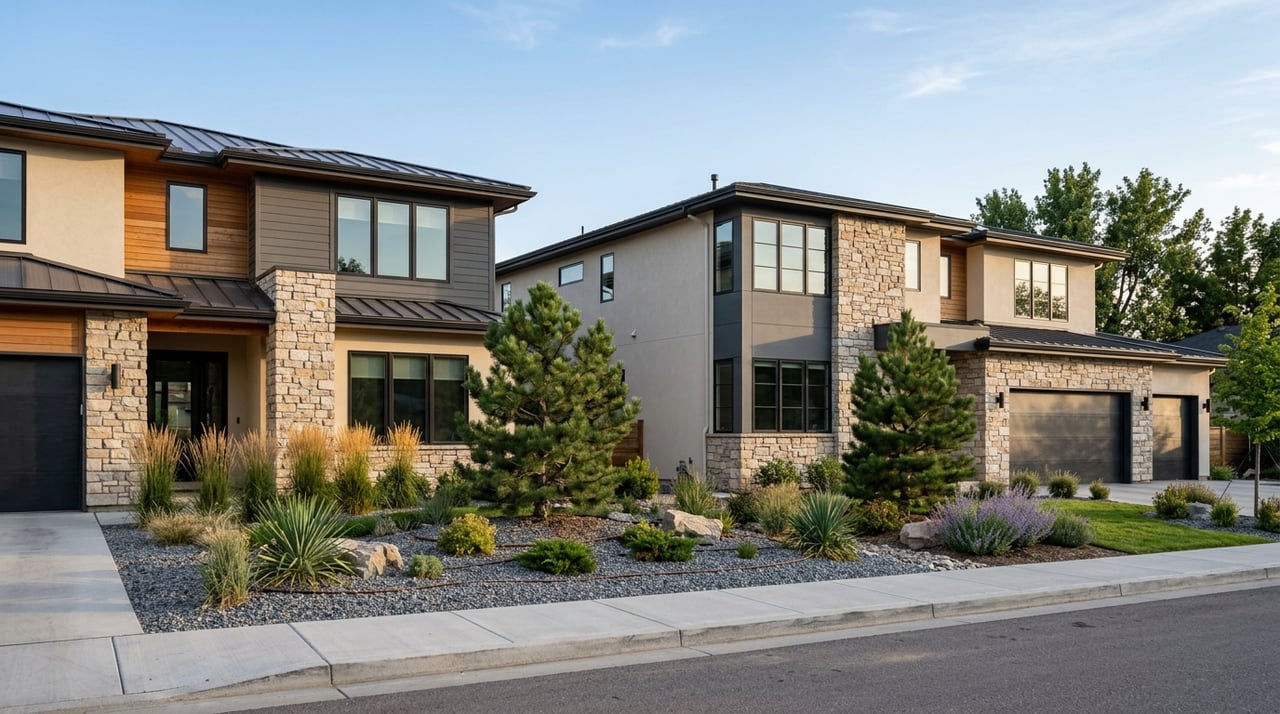
Cordera’s current product is primarily single-family housing with semi-custom and custom-influenced designs. Ranch and two-story floor plans dominate the neighborhood, which gives move-up buyers a wide range of layouts depending on how you want to use the space.
If you want main-level living, several builders offer ranch plans with substantial finished square footage. If you need separation between living and bedroom zones, or more room for offices and flexible use, two-story plans are common as well.
Builder Range Shapes Your Options
Campbell Homes offers ranch and two-story plans in Cordera ranging from about 3,399 to 4,534 total square feet, with 4 to 7 bedrooms. Its Cordera materials also state that all of its homes there include finished basements, and highlight cul-de-sac, walkout, and view lots.
Goetzmann Custom Homes positions its Cordera homes in the $900s and up. Its listed floor plans range from 3,788 to 5,032 total square feet, with both ranch and two-story options in the current lineup.
Saddletree’s model home in Cordera, the Ventura, is a 4,155-square-foot plan with 5 bedrooms, 5 bathrooms, a pocket office, custom wet bar, 10-foot basement ceilings, and an oversized 3-car garage. Its broader Cordera product range shows 3 to 7 bedrooms, 3 to 6 bathrooms, 2+ garages, and lot sizes from roughly 8,100 to 21,350 square feet.
CreekStone remains part of the Cordera builder mix as well. Community marketing places homes across the builder lineup from the $700s to $1 million+, while CreekStone positions itself as a lower-$700s-and-up option and notes six homesites remaining.
Why Plan Type Matters for Move-Up Buyers
When you move up, the real question is not just how big the house is. It is how much of that space is finished, how flexible the layout is, and whether the lot and garage setup fit the way you actually live.
In Cordera, many homes lean into finished basements, larger bedroom counts, and more specialized spaces like offices, wet bars, or oversized garages. That can make the jump in value feel more tangible if you need room for work, hobbies, guests, or multi-use living.
How Mature the Community Is Today
Cordera is not an early-stage neighborhood where everything is still being defined. The official builders page says there are five locally owned builders associated with the community, but some are already sold out.
Campbell Homes, Saddletree Homes, and Goetzmann Custom Homes still have sites, while Vantage Homes is sold out. Community features also list CreekStone among the builders tied to Cordera.
For you, that maturity can be a plus. It often means you are evaluating a neighborhood with an established look, built-out amenities, and clearer resale patterns, rather than buying into a concept that is still taking shape.
Understanding Cordera HOA Costs
Base HOA Dues
Cordera’s official HOA page lists the 2025 assessment at $123 per month. That fee covers common-area maintenance, common-area utilities, snow removal in common areas, weekly trash and recycling, common-area insurance, reserve funding, and community center operation and membership.
You may still see older references to $110 per month on community-center materials. For an actual purchase, the current HOA disclosure or estoppel for the specific property should control.
What the HOA Covers
The HOA is focused on neighborhood-level amenities and maintenance, not core city services. HOA materials state that the City of Colorado Springs and Colorado Springs Utilities provide most public-safety and utility services.
That distinction matters when you compare Cordera with newer communities. You are paying HOA dues for shared-use features and maintenance, not for replacing standard municipal service systems.
Why You Should Verify Every Address
This is where move-up buyers need to stay disciplined. Not every Cordera property appears to carry the exact same monthly structure.
One recent Cordera listing at 3878 Bierstadt Lake Court showed a $368 monthly HOA plus a second association fee of $235 monthly, while also stating no metro district. Another listing at 5035 Petrified Forest Trail explicitly stated no metro district as well.
The takeaway is simple: verify the exact address, subdivision, title documents, and fee structure before you underwrite the deal. Do not assume every Cordera home has the same monthly obligations just because it shares the same neighborhood name.
Taxes, Districts, and Closing-Cost Details
Cordera’s published tax example includes a Briargate GID line item rather than a metro district line item. According to the City of Colorado Springs, general improvement districts are separate from metro districts, and the Briargate GID 2021 exists to perform streetscape and related maintenance.
That is important because buyers in Colorado often watch closely for metro district costs. In Cordera, the district structure may look different from what you see in some newer developments, so you need to review the actual tax record and listing disclosures for the property you want.
There are also transaction-cost items that can affect your move-up math. Cordera’s HOA insert says the original buyer pays a working-capital assessment equal to 25% of the current year’s HOA dues, and each resale carries a seller-paid community enhancement fee of 0.25% of the resale price.
If you are both selling and buying, those fees deserve a place in your planning. They are not monthly carrying costs, but they can still affect cash to close and net proceeds.
How to Compare Value Inside Cordera
Use Total Cost of Ownership
Cordera’s own community materials recommend evaluating homes through a total cost of ownership lens. That means looking beyond list price to include property taxes, community dues, commute costs, and utilities.
For move-up buyers, this is the right framework. A home with a higher price tag may still be the stronger value if it offers more finished space, a better lot, or lower recurring costs.
Price Per Finished Square Foot Matters
A useful first screen is price per finished square foot, not just total asking price. Recent Cordera examples show how quickly value can shift inside the same neighborhood.
A 3,706-square-foot Cordera home listed at $799,000 works out to about $215.60 per square foot. A 3,312-square-foot Cordera home listed at $595,000 works out to about $179.65 per square foot.
Those numbers are not enough on their own, but they help you frame better questions. You still need to compare finish level, basement completion, garage count, and lot position before deciding which home is truly the better buy.
Focus on the Features That Change Utility
In Cordera, a few variables can create large value differences from one home to the next:
- Finished versus unfinished space: Builders such as Campbell emphasize finished basements, which can materially change how much usable space you get.
- Lot quality: Cul-de-sac, walkout, and view lots often command a premium.
- Finish package: Standard features and upgrade levels vary by builder.
- Energy approach: CreekStone emphasizes energy efficiency and third-party verification.
- Amenity use: The community center, pools, fitness room, Grand Lawn, trails, and parks add more value if you will use them regularly.
This is where a process-driven comparison helps. Two homes can look close in price, but once you adjust for finished basement value, lot premium, monthly fees, and long-term utility, the better option often becomes clearer.
Amenities and Neighborhood Design
Cordera’s appeal is not just inside the homes. The neighborhood also includes a heated pool, lap pool, fitness room, Grand Lawn, trails, themed parks, and a renovated community center.
The community also uses six architectural styles and an approved landscape program. Official materials note that the program includes a free professional design and two free trees when approved contractors are used.
For a move-up buyer, those details can affect both lifestyle and cost. A more complete neighborhood environment can reduce some of the blank-slate expense and visual inconsistency that buyers sometimes run into in newer subdivisions.
Is Cordera the Right Move-Up Choice?
Cordera tends to make the most sense if you value a larger home, a more established neighborhood feel, and an amenity package you will actually use. It can also be a strong fit if you want more finished square footage and are willing to evaluate the purchase with a full-cost lens rather than just a headline price.
The biggest mistake is treating every Cordera home as interchangeable. Plans, lot quality, builder standards, fees, and property-specific charges can vary enough that a disciplined side-by-side analysis is worth the effort.
If you are comparing Cordera with other north Colorado Springs options, the goal is not just to find the cheapest monthly payment. The goal is to identify the home that gives you the best combination of usable space, recurring cost, and long-term fit for how you live.
If you want a clear, numbers-first comparison of Cordera options, Precision Spaces can help you build a precise market plan and evaluate the full cost before you make your move.
FAQs
What types of homes are common in Cordera for move-up buyers?
- Cordera mainly offers larger single-family ranch and two-story homes, often with semi-custom or custom-influenced designs, multiple bedrooms, larger garages, and substantial finished square footage.
What is the Cordera HOA fee?
- Cordera’s official HOA page lists the 2025 assessment at $123 per month, but buyers should verify the current disclosure package for the specific property because some homes may have different or additional fee structures.
Does Cordera have a metro district?
- Cordera’s published tax example shows a Briargate GID line item rather than a metro district line item, but you should still confirm the tax and district details for the exact address you are considering.
What does the Cordera HOA cover?
- The HOA covers common-area maintenance, common-area utilities, snow removal in common areas, weekly trash and recycling, common-area insurance, reserve funding, and community center operation and membership.
How should you compare Cordera home values?
- Start with total cost of ownership, then compare price per finished square foot, basement completion, lot quality, finish level, garage count, and recurring monthly costs.
Are there extra transaction costs in Cordera?
- Yes. Cordera’s HOA materials state that original buyers pay a working-capital assessment equal to 25% of the current year’s HOA dues, and resales carry a seller-paid community enhancement fee of 0.25% of the resale price.